
Walk a Mount Vernon Street
A street directory search should move from geography to names, not treat a broad map result as a resident roster. Begin with one valid address. The Assessor establishes the parcel and ownership field. iMap shows the parcel shape and adjacent land. The Auditor then ties a legal interest to a dated document. Voter and directory sources add only the limited facts their rules allow.
Save the search date because property and voter records change. For a whole street, use the Assessor's Road option or map zoom, then inspect parcels one at a time. This prevents a broad township or buffer result from being mistaken for a household list.
- Enter the full address in the Skagit Assessor search.
- Copy the parcel number, situs, owner, mailing address, and legal description.
- Open iMap, select the parcel, and inspect adjacent shapes.
- Search the Auditor by party, parcel, legal text, or file number.
- Use lawful voter access and reverse directories only for the question at hand.
Search Mount Vernon Street Fields
The Skagit County Assessor Property Search offers explicit modes for an address, parcel, owner name, road, and XrefID. The address mode is best for one known house. Road search supports street-by-street review. Owner Name uses the Last First pattern. The returned card groups facts in Summary, Improvements, Land, Transfers, History, Taxes, Permits, Map View, and Sales Comps tabs.
| Portal field | Entry style | Street use |
|---|---|---|
| Address | House and road | Resolve one site |
| Road | Street name | Review parcels along a road |
| Parcel | Parcel ID | Return to one property |
| Owner Name | Last First | Check named ownership |
| XrefID | Known county ID | Match a saved reference |
The parcel schema separates `SitusStNo`, `SitusStName`, and `SitusCSZ` from `OwnerAdd1/2/3`, owner city, state, and ZIP. That distinction is central to any Mount Vernon street directory.
View the Assessor's official interface before the captured screen.
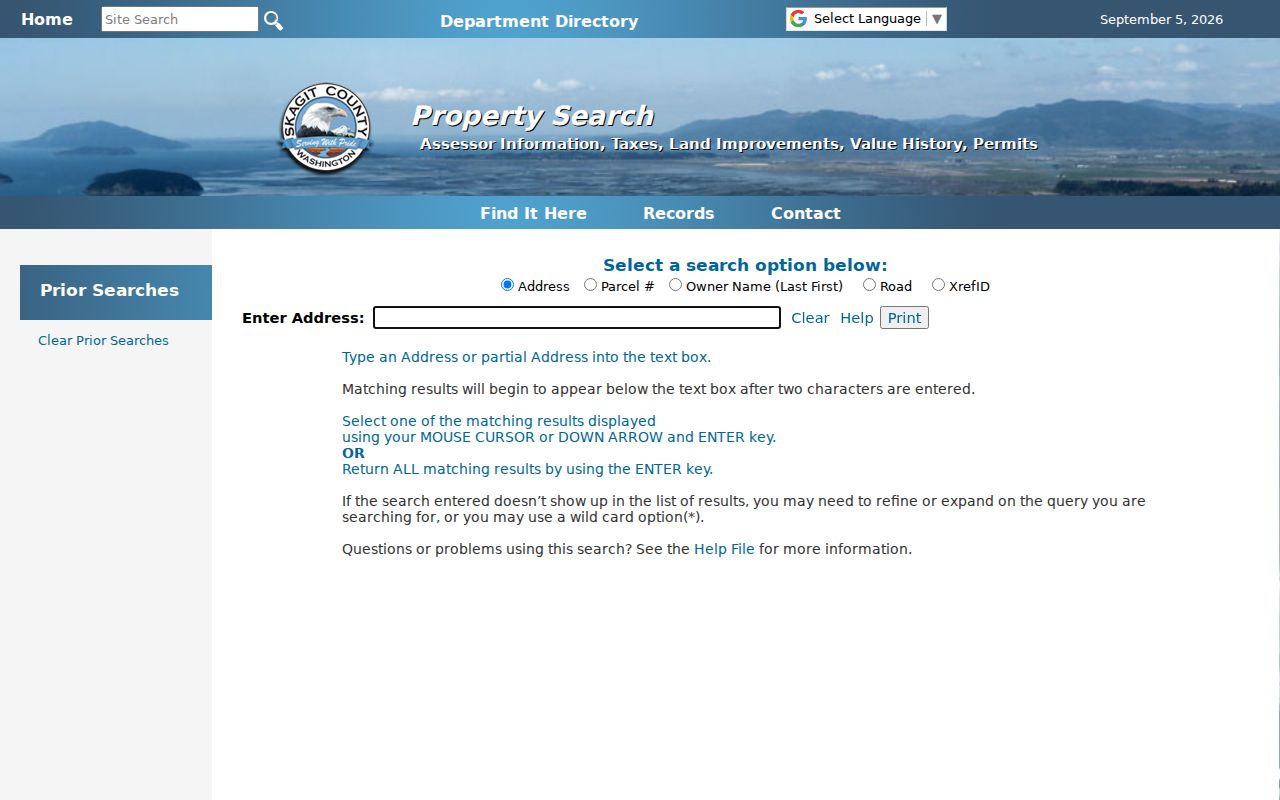
The tabs provide context, but named ownership still does not identify every occupant.
Read Mount Vernon Street Parcels
The Skagit iMap viewer searches by address, ParcelID, and Public Land Survey System location. Click a parcel to connect the street to its geometry and county fields. Buffer and export tools can help compare nearby parcels. Keep the radius narrow and review each returned parcel rather than publishing an unfiltered list.
A map click may also reach Auditor documents tagged to a broader section, township, and range. That is a local iMap quirk, not proof that every document belongs to the selected lot. Compare parcel ID, legal description, and the instrument itself. Platted lots often use subdivision, block, and lot language; metes-and-bounds descriptions may not map cleanly to a street number.
The county iMap source displays the map and parcel controls.
The map is strongest as a geographic cross-check for the Assessor record.
Separate Mount Vernon Address Types
A situs address names the parcel's physical location. The owner mailing address is where tax correspondence goes. A mismatch can reflect an agent, estate, trust, mailing preference, nonlocal owner, or another normal data condition. It neither proves vacancy nor names a renter. State exactly which field supports a conclusion.
- Parcel
- A unit of land tracked with a county identifier.
- Situs address
- The physical location assigned to the parcel.
- Plat
- A recorded map dividing land into lots or tracts.
- Criss-cross directory
- A printed directory arranged by street and house number.
The Assessor may also show values, exemptions, transfers, permits, year built, and improvements. Those facts can test a property timeline. Do not infer owner occupancy unless the displayed field actually supports it.
Can one owner field identify a household? No. It identifies the person or entity carried on the tax roll. Other adults, relatives, renters, and people who recently moved may not appear.
Mount Vernon Street Record Layers
Each address-keyed source adds a distinct layer. A reproducible street directory labels the keeper, date, and limit rather than merging all names into one claim. County address search covers county-maintained addresses, while incorporated Mount Vernon addresses remain under city authority.
| Address record | Keeper | Evidence shown | Access |
|---|---|---|---|
| Property roll | Skagit Assessor | Owner, situs, mailing, transfers | Free portal |
| Parcel map | Skagit GIS | Geometry, parcel and district fields | Free viewer |
| Recorded documents | Skagit Auditor | Parties, legal text, date, AFN | Online index, office copies |
| Permit notices | Mount Vernon Building | Project, date, applicant fields when public | Portal or request |
| Voter record | Elections and SOS | Legally public registration fields | Lookup or controlled extract |
| Reverse directory | Library and genealogy collections | Dated adult occupant entries | Shelf, microfiche, online clues |
The chain works because the parcel number and legal description connect Assessor, GIS, and deeds. A stable street name connects dated permits and directories, subject to address changes and collection gaps.
Trace Mount Vernon Street Deeds
The Skagit Auditor index searches Auditor File Number, party, document type, filing dates, and sort controls. Advanced search adds grantor, grantee, filed by, legal description, parcel prefix, permit, tax account, and land-survey fields. Use an Assessor owner or legal description to enter the chain.
For a deed trail, identify the current transfer, read the grantor and grantee, then search the earlier transaction involving the prior party. A grantor gives an interest; a grantee receives it. Mortgages, releases, easements, liens, and plats are separate instruments and must not be read as sales. Images can be unavailable or unofficial, while certified copies come from Auditor Recording.
The current index begins in 1973. The historic interface says 1942 to 1976, while the main office description says 1942 to 1973. Older searches rely on role, surname initial, year, date, file reference, office books, or archives. An absence in parcel search may reflect older indexing, not absence of a deed.
The advanced recording source shows the address-related fields.
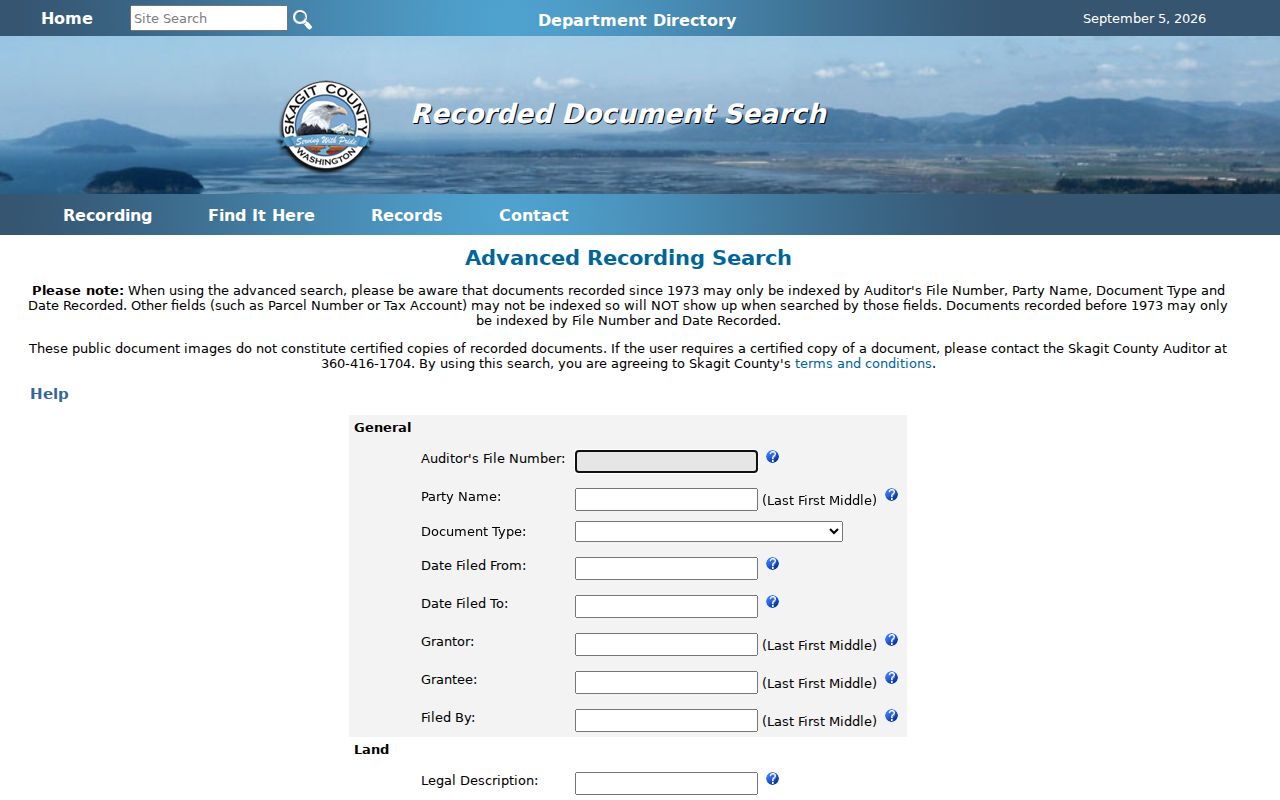
The screen shows why legal text and party search should be tried when parcel indexing fails.
Check Mount Vernon Street Permits
Mount Vernon Permit Notices can be searched by permit number, address, name, or contractor. The city describes commercial and residential building, demolition, mechanical, plumbing, reroof, sign, solar, engineering, fire, planning, flood, and related permits. Prefixes include BLDG with a two-digit year, ENGR, FIRE, PLAN, FLOOD, and CA.
A permit can date work and may show an applicant, owner, or contractor field. It does not prove who occupied the address. Dynamic portal coverage and complete result fields were not verified in the research, so use only what appears and ask the Building Division for missing public records.
The city permit-notice source provides the official search route.
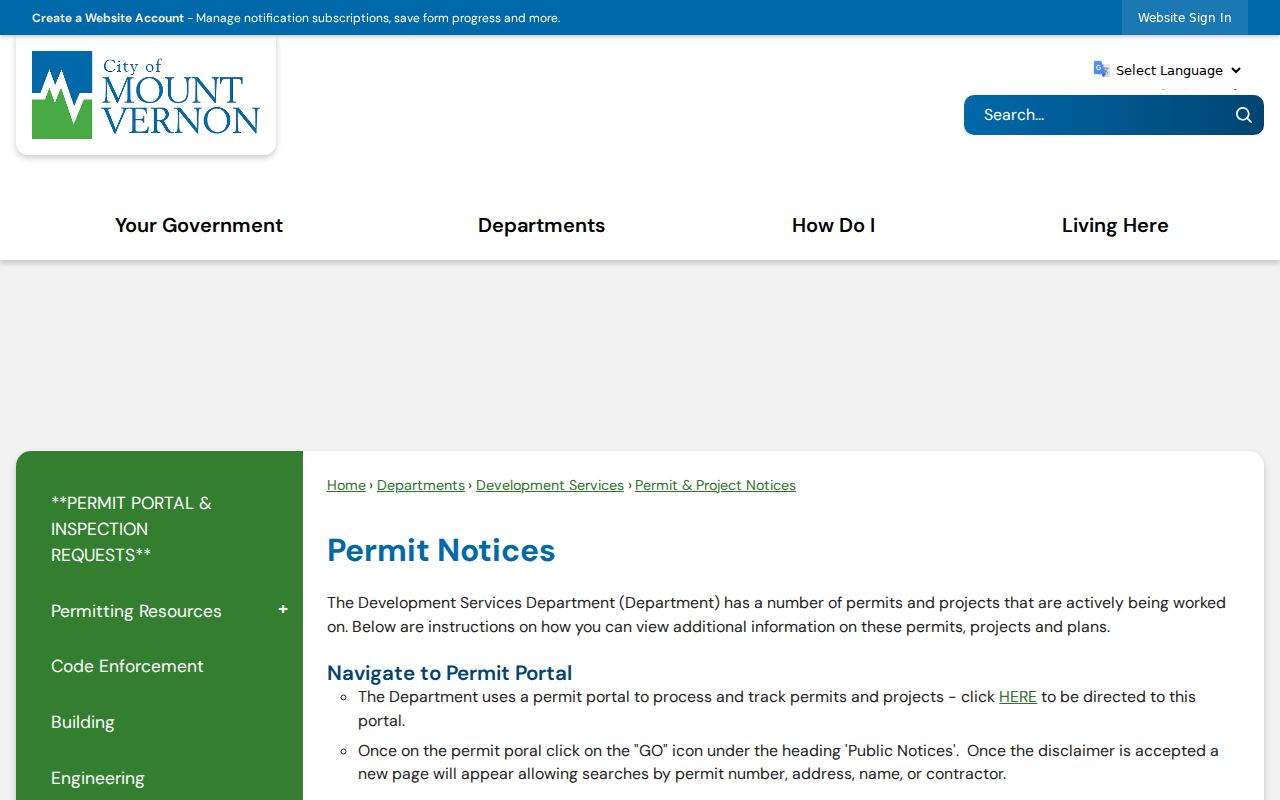
The captured page is useful for address-dated project evidence, not a resident roll.
Mount Vernon Address Jurisdictions
Mount Vernon assigns addresses inside city limits. Skagit County Address Management handles county territory and areas within the urban growth area that remain outside the city. The county address search therefore warns that its maintained data does not replace the city's authority.
The county's 2021-22 aerial and spatial project improved legacy address-point accuracy from roughly 300 feet to about 13 feet. That explains why an old GIS point and a current map can differ. It is not evidence of a citywide street renumbering. No official single renumbering year was found.
When an old street number fails, compare the legal description, plat, historical map, directory street index, Auditor reference, and city or county verification. ZIP codes also follow postal delivery rather than city boundaries.
The county address-search source shows the jurisdictional route.
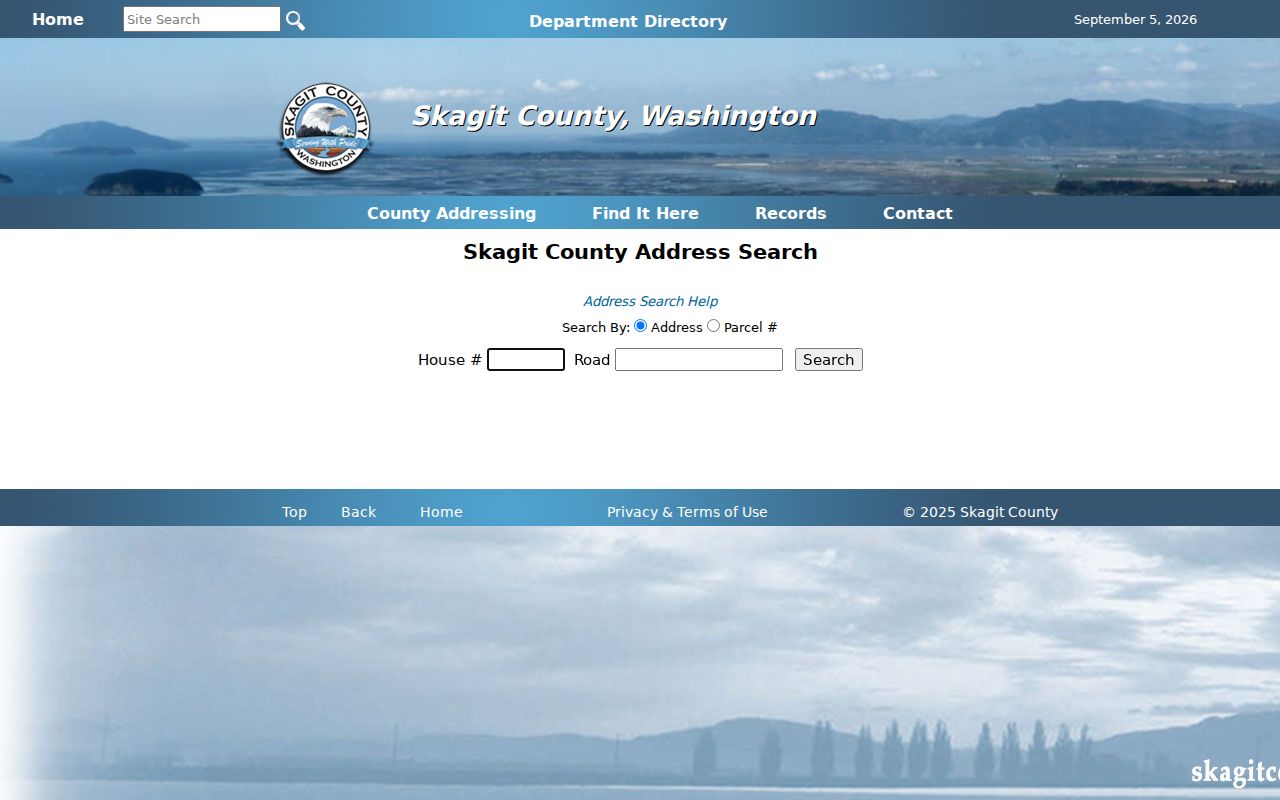
The interface helps test whether an address belongs in the county-maintained set.
Mount Vernon Voters by Street
VoteWA supports individual registration questions. A statewide active-voter CSV is a controlled request through the Secretary of State, not an ordinary public screen that promises everyone on a street. RCW 29A.08.720 identifies public fields, while RCW 29A.08.740 restricts use. Skagit Elections provides phone, email, and in-person help.
Public fields can include name, address, political jurisdiction, gender, birth year, voting record, registration date, and number. A voting record means participation, not ballot choice. Social Security numbers, driver identifiers, signatures, full dates of birth, and protected addresses are not ordinary public fields. Washington does not maintain routine party preference registration.
The full extract refreshes near the first business day monthly and requests can take up to five business days. A street directory should not republish a block roster. Use voter data only for a lawful, narrow verification and retain the date of the file.
Read Older Mount Vernon Streets
A reverse or criss-cross directory changes the search order: street and house number first, then the adult name, spouse notation, occupation, telephone mark, or ownership symbol printed for that year. The Skagit directory runs are discontinuous. State Library holdings include 1882, 1884-85, 1887, selected mid-century volumes, 1970s and 1980s runs, 1989-91, and 1998-2004.
Skagit Valley Genealogical Society holds Polk volumes, microfiche, reference material, and offers volunteer or interlibrary-loan help. Mount Vernon Library Commons supplies newspaper and database research. The complete shelf belongs on the Mount Vernon city directories page; use it here only to attach one address to one dated entry.
Pair a directory hit with a deed, census year, newspaper notice, or probate file. A missing year is a collection gap. It does not prove a household moved. Historical spellings, initials, widow marks, and old house numbers require the volume's abbreviation key.
Request Missing Mount Vernon Addresses
If the portal does not expose a permit or address record, send a focused request to the department that holds it. The Washington Public Records Act covers identifiable, nonexempt records, but an agency does not have to create a new street directory or answer a research question.
Skagit County uses NextRequest. Its response framework is five business days to provide records, acknowledge with an estimate, or deny with a reason. A useful request gives the physical address, possible former address, parcel or permit number, record type, and date span. Ask for electronic review or office inspection when suitable.
For city records, use the Mount Vernon department or public-records route. For old deeds, contact Auditor Recording, Records Management, or archives. Library and genealogy staff are the fallback for directories, microfiche, and newspapers.
Mount Vernon Street Directory Limits
No public street directory proves every person who lives at an address. Parcel owners may live elsewhere. Mailing and situs addresses can differ. Permit applicants and contractors may never occupy the site. A deed records an interest on a date. A directory is a snapshot, and voter records may be protected, old, inactive, or controlled by use rules.
Utility customer lists and motor-vehicle addresses are not public household shortcuts. The Washington Address Confidentiality Program supplies substitute addresses for eligible people. Restricted court or vital records stay restricted. Do not infer a family link from a shared surname or a household from adjacent parcels.
Lawful use. Use Mount Vernon address records for personal research, genealogy, estate work, property history, or civic questions. Never stalk, harass, threaten, or expose anyone.
When accuracy matters, record the exact field and date, compare two independent records, then confirm with the custodian. That practice makes by-address research useful without turning a narrow public fact into a claim it cannot support.