
Verified Mount Vernon Directory Runs
Mount Vernon city directories survive in several collections, and none should be treated as a complete annual shelf. The Washington State Library catalog supplies the broadest verified Skagit County sequence. The Skagit Valley Genealogical Society, or SVGS, identifies several Polk volumes in its own holdings. FamilySearch adds a national name index, while the Library Commons and county newspaper index help bridge years when no directory was found. Contact a repository before traveling because access rules and hours can change.
| Collection | Years | Where Held | Access |
|---|---|---|---|
| Washington State Library Skagit directories | 1882; 1884-85; 1887; 1923-24; 1937; 1948; 1962; 1973-75; 1979-81; 1983; 1985; 1987; 1989-91; 1998-2004 | Washington State Library | Contact first; limited appointment notice applies |
| Polk city directories | 1975, 1983, 1987, 1989, 1990, plus holdings requiring shelf confirmation | SVGS library | Reference use and volunteer help |
| U.S. City and Business Directories | About 1749-1990 nationally | FamilySearch | Indexed online; account or image limits may apply |
| Federal census schedules | Individual schedules through 1950 | NARA and library databases | Online and library access |
The State Library list jumps from 1887 to 1923-24 and from 1962 to 1973-75. Those breaks are evidence about the collection, not proof that a person left Mount Vernon. The research did not establish the first local publication or the last printed year. Cite only a volume that can be verified in a catalog or on a shelf.
Mount Vernon Directory Repositories
The Mount Vernon Library Commons at 208 W Kincaid Street is the local public research point. Its research services include newspapers and digital databases, though the city does not claim that every historic volume is on its shelves. The verified directory list comes from the Washington State Library county-directory catalog and the SVGS holdings PDF.
SVGS describes reference books, a microfiche reader, interlibrary loan, and volunteer hours on Monday from 11 a.m. to 1 p.m. Its mailing address is PO Box 192, Burlington, WA 98233-0192. Meetings are normally held at Burlington Public Library on the second Saturday from 1 to 3 p.m., except July, August, and December. Confirm access through the society contact page before a visit.
The Library Commons page shows the current public entry point:
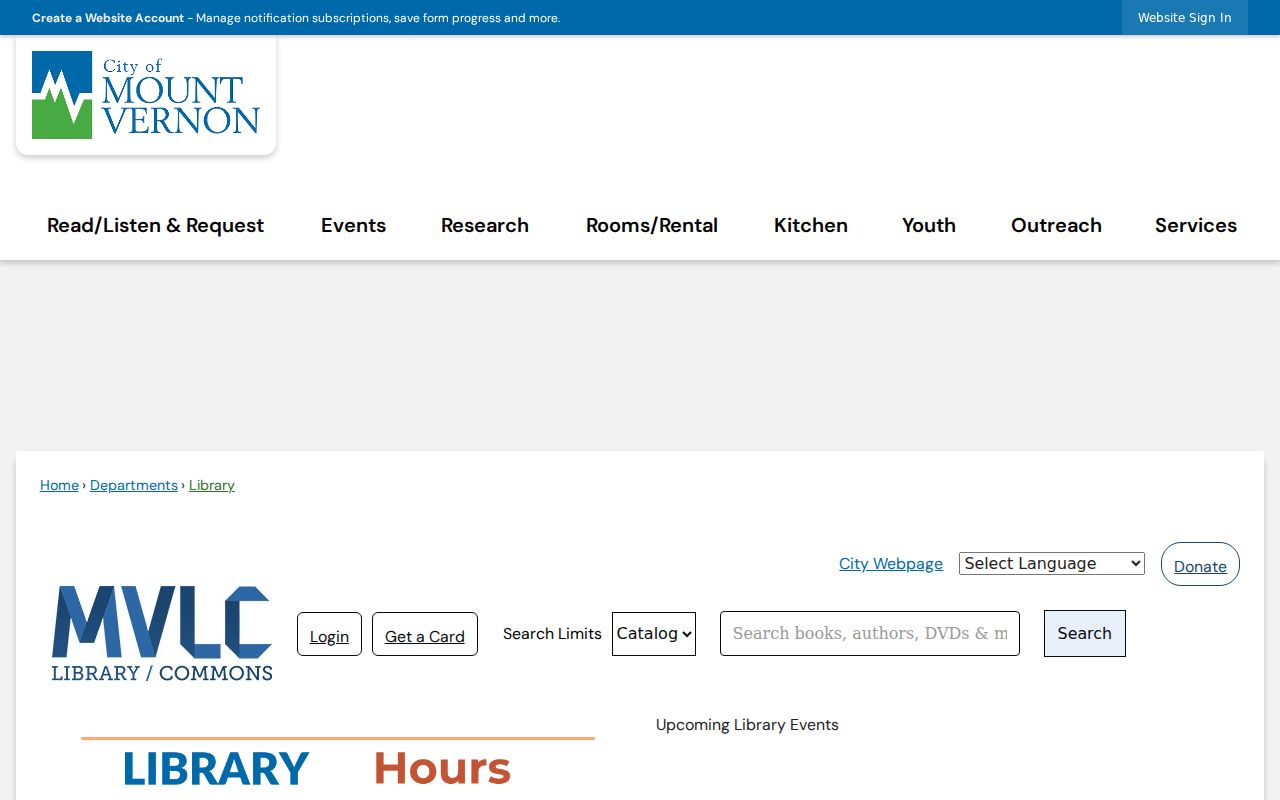
This source helps confirm contact and access details, while the separate catalogs establish which city directories have been verified.
Mount Vernon Directory Gaps Matter
A blank search result has several possible causes. A Mount Vernon city directory may not survive for that year, the person may appear under initials, or the publisher may have omitted part of Skagit County. Women can be listed under a spouse's name. Children, lodgers, rural-route residents, and short-term residents may be absent. Compilation often took place months before publication, so even a clear entry does not establish residence for every day of that year.
Search one volume before and one after the target date. Try the surname alone, a first initial, a spouse's name, and alternate street forms. If a house number seems to shift, carry the parcel or legal description into county land records. Mount Vernon's city addressing office handles addresses inside city limits, while county Address Management covers county and urban-growth-area records. No verified citywide renumbering year was found, so a changed number must be proved case by case.
Note: Missing directory years call for another source, not a guess about where a Mount Vernon household went.
Read Mount Vernon Directory Entries
A Polk-style entry can compress a household into one short line. Begin with the volume's own abbreviation key, since marks can change by publisher and year. Then compare the name-order and street-order sections. The alphabetical side may show a spouse or line of work, while the reverse side places the printed name beside a street and house number. Neither side is a live resident roll.
| Personal name | Surname, given name or initial, and sometimes a spouse in parentheses |
|---|---|
| Work line | Occupation, employer, or business as printed at compilation time |
| Street line | House number, street, and sometimes a residence or rooming mark |
| House status | An owner or renter symbol, only when the key defines one |
| Family notation | A widow mark or spouse reference that may lead to death or marriage records |
- Criss-cross directory
- A directory arranged by street and house number instead of surname.
- Householder index
- A list keyed to the person treated as the main adult at an address, not a full household census.
- Abbreviation key
- The publisher's legend for short forms and symbols. Save it before interpreting an entry.
Do not turn an old occupation or employer into a present-day claim. Record the edition, page, exact spelling, and all marks. That small citation makes it possible to check the entry later.
Mount Vernon Directory Newspaper Gaps
Skagit County's Historic Index works like a search calendar when directory years are missing. It identifies Mount Vernon Daily and The Skagit News material from 1895, Courier Times from 1904, Mount Vernon Argus and Burlington Journal from 1909, and Concrete Herald from 1920 through 1970. Obituaries, legal notices, school news, business ads, and civic reports can connect a name to a date without claiming a current address.
The county's historic-index screen is preserved in this capture:
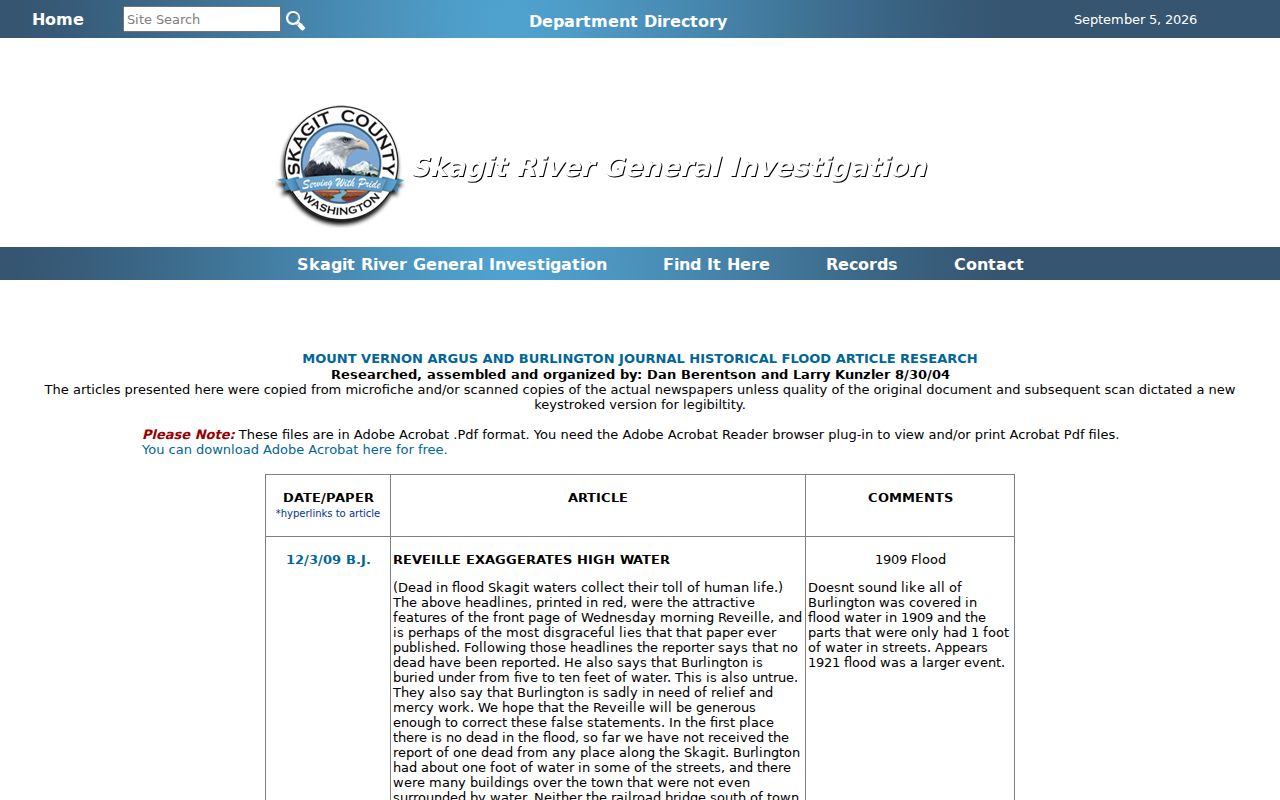
Search a surname with the street, spouse, business, or club named in the city directory. The Library Commons research page advertises Skagit Valley Herald coverage from 2005 onward and other newspaper databases from 1985 onward. Provider and login rules can vary, so ask staff which archive fits the date.
Mount Vernon Directory Archive Clues
The Skagit County Historical Society and Museum maintains a research library in La Conner with help by appointment. Its documented holdings go well beyond city directories: letters from 1838 through 1967, organization papers from the 1880s through 1972, plats, maps, passports, photographs, clippings, church records, minute books, ledgers, and oral histories. A person missing from a printed directory may appear in a photograph caption or group record.
The archive includes papers linked to the Good Templars, IOOF, AFL, Western Labor Union, GAR, Grange, Freemasons, Mount Vernon Rotary, and cannery workers. These sources are historical clues, not current membership lists. Give the archivist a full name, date range, known address, and group or trade when possible.
The official research-library page shown below explains the appointment route:
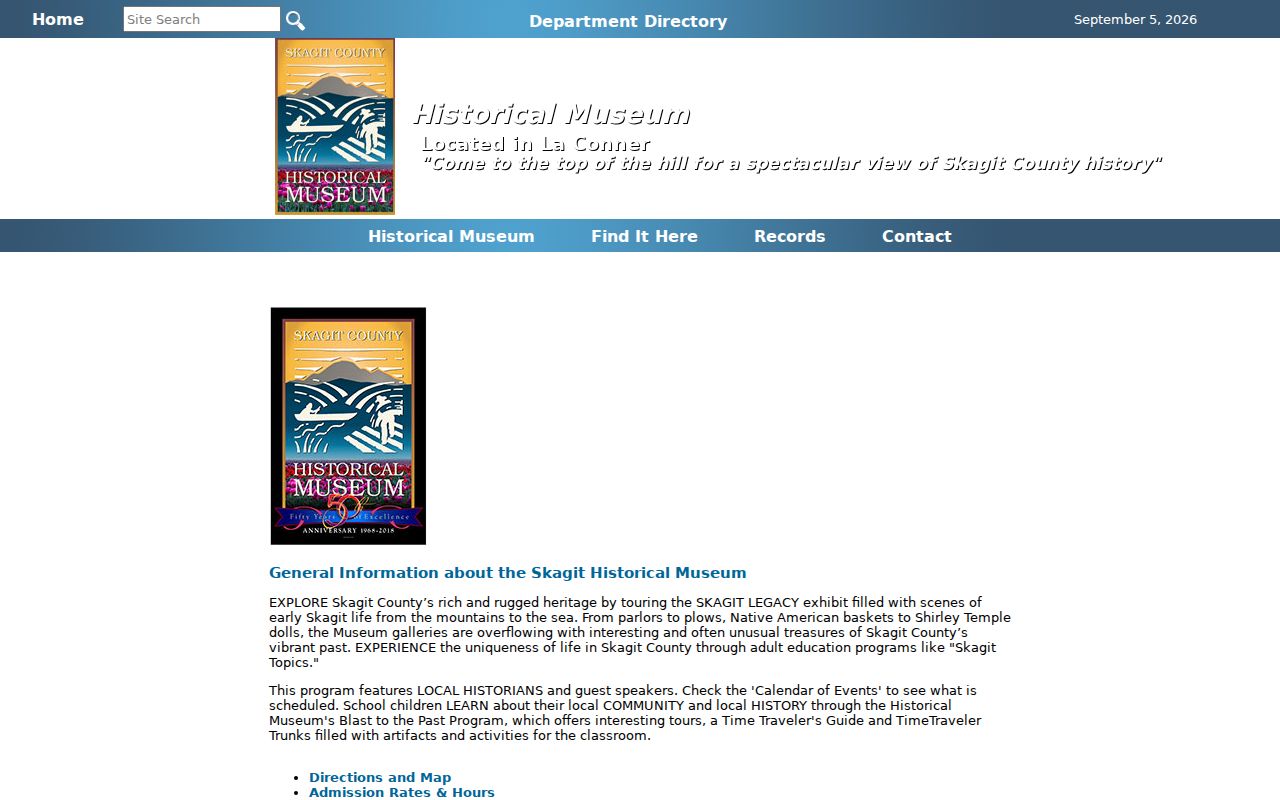
That human help is most valuable after the catalog, newspaper index, and known directory years have narrowed the question.
Mount Vernon Directory Map Context
The Library of Congress Sanborn item is a one-sheet Mount Vernon map dated July 1890. It is unusually close to the city's incorporation record, which notes the state filing on July 5 of that year. The map can show the built footprint, street labels, and structures that framed an early directory entry. It does not name occupants.
Use the map after a directory, newspaper, deed, or census has supplied a person and place. A structure shown on the sheet may explain an old business address, but it cannot prove who lived there. The research found no additional official Mount Vernon Sanborn years, so do not imply a long mapped series.
Pair Mount Vernon Directory Snapshots
Federal census schedules supply household detail that a city directory can miss. The latest public individual schedule is 1950 under the 72-year release rule. Fields vary by census, but names, ages, birthplaces, family ties, occupations, street details, and home information may appear. Most 1890 schedules were lost in the 1921 Commerce Department fire, so that break is national rather than a Mount Vernon records failure.
A useful timeline is simple:
| 1930 | Compare the schedule with the nearest verified Skagit directory years. |
|---|---|
| 1940 | Use directory addresses and newspaper notices to separate same-name people. |
| 1950 | Anchor the full household, then follow later Polk volumes. |
| 1973 onward | Add the county's current recorded-document index for ownership changes. |
The National Archives census guide explains schedule access. A directory entry dates an association; a census may name the household; a deed identifies recorded parties. Each answers a different question.
Trace Mount Vernon Directory Families
Family research is strongest when every city directory entry is treated as a dated lead. Start with a year and name that can be confirmed. Move to the next available edition, not an assumed next year, and keep a log of address, spouse, initials, occupation, and phone details. Then test the pattern against census, deed, newspaper, probate, and cemetery records.
- Find the first verified appearance and record the full citation.
- Check each available later volume, noting spelling, initials, spouse, work, phone, and moves.
- Use the reverse section to confirm the printed house number and nearby names.
- Compare the closest public census schedule and the Skagit deed index.
- Use an obituary, probate file, church record, or cemetery source to explain the end of the trail.
A disappearance may mean death, a move, a missed canvass, a name change, or a gap in the surviving shelf. Newspaper and probate searches help distinguish those outcomes. For modern name verification after the historic trail, use the Mount Vernon resident lookup and check the original record custodian.